




When looking for the best business mobile phone provider, it’s key to evaluate a few specifics before agreeing your next contract. There are a number of commonly used providers for both business and personal mobile contracts; EE, O2, Three, and Vodafone being the biggest players in the market. Their long-standing operations, high number of customers, mostly positive reviews, and their ongoing improvement in the industry propels them above the rest. Despite the option of signing up with the networks themselves, there are benefits for signing up to a dedicated B2B business such as Aerial Direct.
A smaller dedicated B2B business can provide more tailored support and recognise your needs with a high-level of expertise. Working with B2B businesses specifically, the likes of Aerial Direct, can relate to your needs and guide you through your business mobile phone contract sign up, recommending suggestions and giving insight into what other businesses may be using of a similar size.
Typically, the speed and reliability of their connection stays somewhat similar. It’s well worth checking with providers specifically if you’re at all concerned about coverage.
Did you know – 2G and 3G is being turned off around the country. The previously mentioned providers have agreed with the government that they’ll be switching off this level of connectivity by 2033. Find out more in our latest blog. We’ll be keeping this up to date with locations that have been switched off so make sure to regularly check in.
We’ll cover data plans to aftercare – everything you need to know when finding the best business mobile provider.
Easily navigate using our contents below.

What is a business mobile provider?
Business mobile providers are companies whose purpose it is to get businesses setup with a mobile phone for work use. Typically, they provide the handset, calling package, and data plan needed to carry out your day-to-day business.
Why go for a business mobile provider rather than find a normal mobile plan?
Simply put – a business mobile plan is setup for business use. In real life this means that it’s setup for more flexibility and has more capabilities than a typical personal contract.
Tailored plans
One of the main benefits of getting a business mobile plan setup with a provider is the option to have custom tailored plans. Data allowance, handset choice, minutes, texts and roaming allowances are all areas which you can customise so that you can ensure nothing on your plan is wasted and you only pay for what you use.

Data sharing
Data sharing can allow for users to share their data allowance across multiple devices and users. This can be especially useful if you’ve got members of a team who use tablets and mobile devices and may be out of the office, using a large portion of their data or a workforce where team members may share ‘on-the-road’ duties. If that’s the case, data sharing from other users can allow for a quick top-up from their plan which they may not be using.

Clear invoicing
Whether you’ve got a finance department or you’re running the books by yourself or in a small team, clear invoicing can make the process as smooth as possible. Getting your finances in check is key for being charged the correct amount of tax and business mobile providers like to help where they can.

Flexibility and control
Sometimes, through a business contract with a provider, you’ll have an account manager. This will make it much easier to make changes and updates to your plan. You’ll also be able to add new business mobiles to your contract if you so choose.
Typically, to get an account manager, you’ll account will have to reach a particular size. This is usually measured by the number of mobile phone contracts you require. The reason for this is your larger account will likely need some more assistance in terms of the general upkeep and maintenance – data, minutes, texts, new contract additions etc.

What are the most common mobile providers?
There are a handful of providers in the UK which are commonly known for business and private (consumer) mobile contracts. Depending on coverage and what costs you’re looking for, you’re able to shop around and find which may fit your needs the best. The provider themselves usually operates with specific providers. For example, Aerial Direct use O2, Vodafone and EE as their chosen networks.
The most common networks in the UK:
Statistics gathered during May 2025.
- EE: Formed in 2010. 21K reviews on Trustpilot. Estimated customer count: 25 million.
- O2: Formed in 1985. 18K reviews on Trustpilot. Estimated customer count: 24 million.
- Vodafone: Formed in 1984. 86K reviews on Trustpilot. Estimated customer count: 19.8 million.
- Three UK: Formed in 2003. 31K reviews on Trustpilot. Estimated customer count: 10.9 million.
These providers have been around for decades and have a wealth of knowledge to ensure their customers are looked after and can help them find the best business mobile contract possible. There are several other providers within the mobile space but in comparison, the size of the above providers have them trumped in most areas. It’s not to say they don’t bring their own piece of the puzzle. The likes of Tesco Mobile, Giffgaff and Sky also offer business mobile services so it’s worth looking around and finding the best solution for your business.

Key areas for a business mobile contract
When evaluating your options for a business mobile contract, you’re going to need to factor in a few different areas. These are key to ensuring you choose the best plan possible for your business.
- Coverage – You’ll need to make sure the provider you choose has the appropriate coverage for the areas you operate. Whether your staff are office, home, or field base it’s worth evaluating signal in all these locations.
- Speed – Depending on the use of the device, it’ll be highly likely that speed will be of high importance. Whilst 4G/5G speeds are common they are not across the entire UK yet, so knowing how far and wide your chosen provider is on this path can affect your decision-making process.
- Reliability – Uptime and dreaded downtime are key to ensure you can operate without interruption. Downtime is becoming a smaller and smaller occurrence but it’s still worth factoring in. Research your chosen network to find out how they operate on a regular basis.
- Support – We all want everything to run smoothly all the time, but the reality is that at some point, you’ll need some aftercare support. Knowing you can get that support when you need it can be the difference between getting your issue fixed and waiting long periods which could affect productivity and profit loss. Aftercare doesn’t always have to mean fixing problems, you may also just need clarity or assistance with plan changes. Whatever the reason, knowing there’s someone just a message or call away when you need them the most is important.

Finding the best deal for your new mobile
When looking at a new business mobile to use, not just for yourself but for other members of your business, you’re going to need to do some research to identify what your requirements are. As there’s so many different types of mobile, some more expensive than others, you may need to shop around for brand, data allowance and tech capabilities.
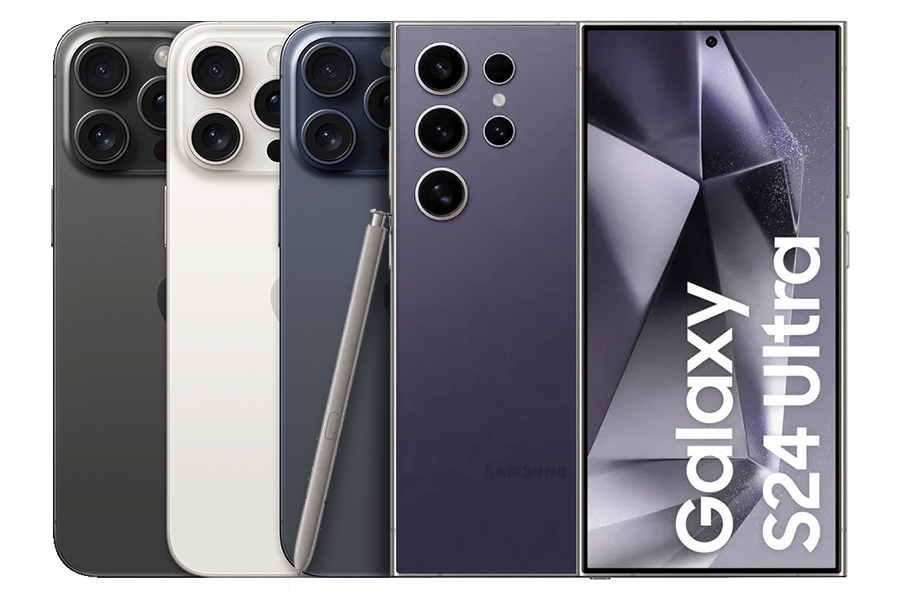
Handset – The typical brands which you’ll see on the market when searching will likely be Apple, Samsung and Google. After that, there are other Android models but the mentioned three are the most typical, largely due to the availability and capabilities of the devices. All three are building and developing their devices to be versatile and capable in any situation which tends to mean they are 5G capable, with front and rear cameras for conference calling, and high-speed internals for quick operations while remaining extremely durable.
Data – Most business mobiles from the larger providers will be 5G capable, so the question for you is how much allowance you’ll require. When considering your needs, you’ll have to factor in how much time you and your team using the mobiles spend connected to Wi-Fi and how much time they’ll be on the road using data. The reason for this is because you can find plans ranging from 5GB to unlimited and the price can vary. To get the best bang for your buck, it’s worth calculating your needs and going just over what you’d need to ensure you’re not overspending and wasting your money.
Don’t be afraid to message and email the networks and providers to see if they can get you the best deal for your needs. They’ll be happy to help you get what you need. It’s good practice to see how they are for customer service too!

The differences between a SIM only and handset contract
When identifying your needs, you’ll find you’ll either need a SIM contract or a handset contract. If you require a SIM contract, you’ll already have the mobile itself. This option is typically cheaper. With a handset contract, you’ll get both a handset and the SIM to go with it.
SIM Contract
- SIM only, no handset.
- Choose your required data allowance.
- Generally cheaper.
Handset Contract
- The handset of choice with a SIM.
- Choose the handset you’d like, the storage size and the data allowance.
- Slightly more expensive but you’re also paying for the device itself.
When finding the best business mobile provider, you’ll have the conversation of how many SIMs or handsets you require. They’d happily guide you through the process and get some important information to give you the best deal possible.

Business mobile provider aftercare
Business mobile providers will be able to provide a good level of aftercare in the form of contact centre support or dedicated account managers. The level of support you’d receive would likely depend on the plan you receive and the size of your contract.
Basic customer support
Within a basic support plan, you would receive updates and advice from leading experts from within the provider itself. This will ensure your contract, whether it’s handset or SIM only, runs smoothly and any issues or questions you may wish to get information regarding, are quickly sorted.
Some areas of assistance could include:
- Device setup
- Data/plan requirements
- General questions
Dedicated Account Managers
When your business is large enough to need a sizeable provider plan for handsets and SIMs, you’ll likely get first hand support from an Account Manager. This is to ensure you’re guided through the process, and you get the support you need to get started and have all users setup without issues.
Some areas of assistance could include:
- Upgrades
- Device setup
- In-depth account care
Regular check-ins to ensure you’re happy with your plan.

How to upgrade your mobile contract
When looking to upgrade, you’ve got a couple of options; finding the best business mobile provider you can across the market or upgrading with your current provider. This is entirely up to you and what you require. There are a few primary areas you should consider before upgrading:
- The type of mobile you require
- Your budget
- Your data requirements
The best place to start would be to go to your current supplier and see what they can offer. The reason for this is it’ll give you an idea of what offers are out there. There’s a chance you may even get a better deal to renew when thinking of upgrading.
When upgrading, if you’re looking to do so before your current contract is up, you may need to pay off the remainder on the bill. Some providers can offer a ‘buy-out’ of your current contract to switch to them but that would be a topic of discussion when exploring your options.
Take a look at our other blogs for more information into the world of business mobiles.